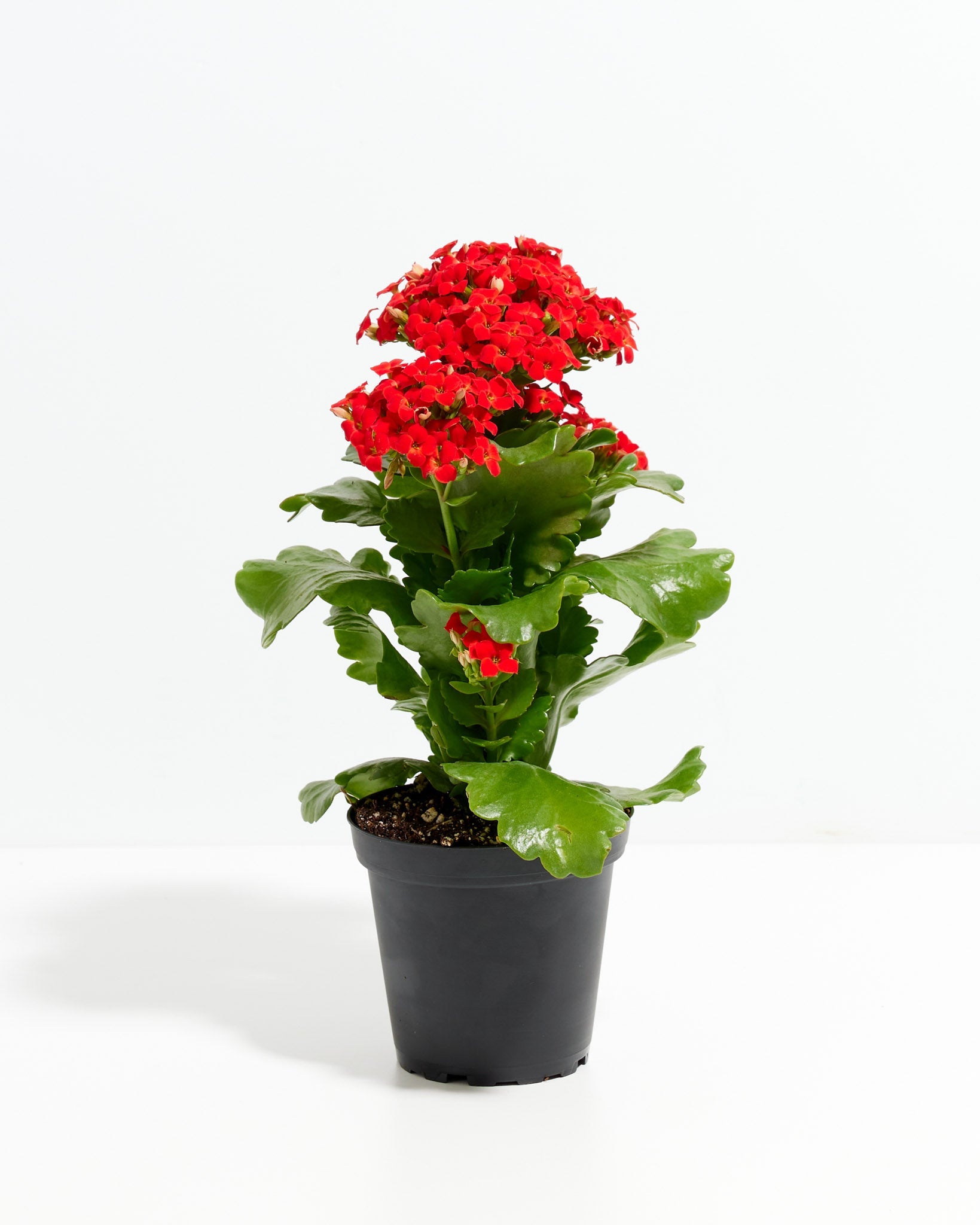
Your new favorite colorful succulent!
An easy-to-grow, long-blooming succulent, the Kalanchoe (Kalanchoe blossfeldiana, also known as Flaming Katy or Florist Kalanchoe) brings a splash of color to any low-care space and makes a cheerful holiday or anytime gift. It loves bright, natural light without much direct sun. Since it's a succulent, its fat, fleshy leaves don't want to be watered all the time: water less often, and a little more while it's flowering.
You will receive a surprise beautiful color from our collection!
*Our blooms vary and may not arrive as they are pictured. We ship our plants still in buds, so you can enjoy a fresh bloom in your home.*

Bright, indirect light to filtered sun.
Allow the soil to dry out completely between waterings.
Doesn't require additional humidity.
Ideally, the Kalanchoe grows best when temperatures are between 60°-85°F. Avoid placing them near a draft or cold spot.
Outside: Grow in partial shade (4-6 hours) where nights are above 60°F.
Indoors: The Kalanchoe prefers bright, indirect light for at least six hours in a south-, east-, or west-facing window.
Fertilize bimonthly during their growing period while the flower is in bloom. Use a balanced liquid fertilizer at 1/2 strength. Reduce during the fall and winter months while the plant is in their dormant phase.
Repot Kalanchoe in the early spring in a well draining succulent and cacti soil mix. Use a container with drainage holes. Place a piece of screening at the bottom of the container over the drainage hole to secure the soil and allow it to drain. Add the mix to the bottom of the new slightly larger container and carefully place them in the center, adding backfill around the edges. Leave a 1/2 inch of space between the soil and the top edge to prevent water spillage. Water as instructed and fertilize with succulent/cacti fertilizer.
Prune any spent blooms from the plant to promote new buds. Trim the stalk back to the second or third leaf. Remove any yellowing leaves from the base and clean debris on the soil. At the end of the growing season, cut all the stems back to prepare them for dormancy and the following year's growth.
Trim a cutting off the plant where they are not flowering, making sure they have at least four to five leaves on them. Remove two to three sets of leaves off the stem with sterile scissors. Allow the stem to callus over for two to three days. This period will protect the new plant from diseases and rotting. Next, take the cutting and dip them in rooting hormone. Use a succulent and cacti mix, and fill the container you're using. Poke the cuttings in the soil and water. Now, create a humidity chamber by spritzing a clear plastic bag and dropping it over the new plant and container. Place the cuttings in bright, indirect light. Keep the soil moist while the cuttings establish roots and leaf growth occurs.
Kalanchoe (Kalanchoe blossfeldiana) is a compact succulent plant with thick, fleshy lobed leaves and clusters of flowers. The flowers can be white, yellow, pink, or bright red and last several weeks.
Native to Madagascar, this Kalanchoe can grow outdoors in USDA hardiness zones 10 to 12. These long-blooming, low-maintenance plants belong to the Crassulaceae family, making them related to Echeveria, some Sedum varieties, and the Jade Plant. The Kalanchoe plant loves bright, indirect sunlight and doesn't need a lot of water, making it one of the easiest flowering plants to grow at home. The ASPCA lists kalanchoe as toxic to cats and dogs (it can cause vomiting and diarrhea), so keep it well out of reach of pets.
Kalanchoes are a popular plant gift for the Chinese New Year as their abundant blooms and bright colors symbolize prosperity and good fortune.
Each flower cluster lasts about four weeks. Snip off spent blooms to make room for new buds, and keep your Kalanchoe in bright, filtered light where nights stay cool, which helps the flowers last longer. Water only when the soil is completely dry: limp, yellow leaves mean too much water, while crisp, dry leaves mean it is thirsty.
Kalanchoe can bloom again next year. Like the poinsettia, it sets buds when nights are long, so starting in fall, give it 14 hours of total darkness each night for about six weeks (an unused closet works) and bright light during the day. Once buds show, move it back to its usual spot. For light, water, repotting, and propagation details, see the Kalanchoe Care Guide & Presentation tabs above.
With its bright flowers and cheerful look, your Kalanchoe plant will add color and fun to your living space. You can grow this small plant indoors and outdoors in warmer climates.
Group your Kalanchoe with other sun-loving indoor plants for a gorgeous plant display:
Because of its toxicity to pets, you might want to find pet-friendly plants as alternatives to the colorful Kalanchoe if you're a pet owner. Here are some suggestions:
Make your living space shine with a bright Kalanchoe, shipped in bud so the flowers open in your home. Want more seasonal color? Pair it with a Red Christmas Cactus or a Red Poinsettia, or browse all our holiday plants.


livelyroot.com
@livelyroot
[title]
[message]Love it? Add to your wishlist
Your favorites, all in one place. Shop quickly and easily with the wishlist feature!